
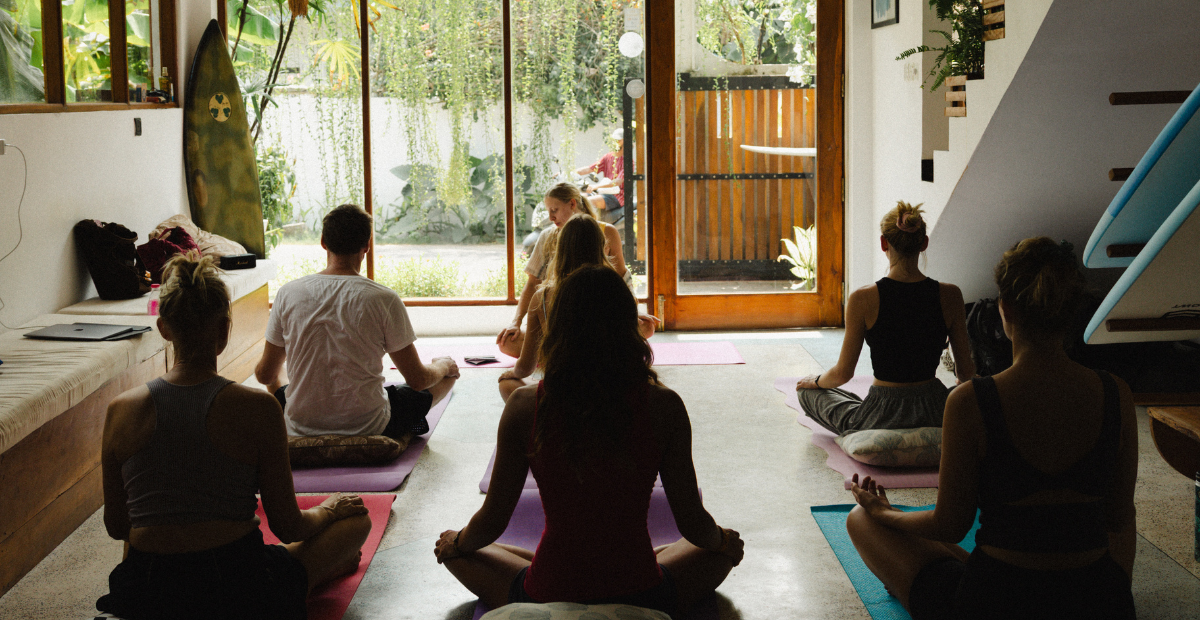
When legendary surfer Gerry Lopez widely known as “Mr. Pipeline” began incorporating yoga into his training in the 1970s, it raised a few eyebrows in the lineup. Not only champions like Gerry Lopez but also Lakey Peterson have spoken openly about how yoga helps with enhanced surfing performance, emphasizing core strength. Yoga for surfers has become one of the most widely adopted cross-training practices in the sport. It is not hard to see why.
Surfing demands a unique blend of explosive power, balance, core stability, breath control, and mental focus, and yoga focuses on every single one of these demands. But yoga is not only useful before you paddle out. Post-surf yoga is one of the best recovery tools available to surfers, helping you bounce back faster, reduce soreness, and protect your body from common surfing injuries. Whether you are catching your first wave or charging heavy sets, this guide covers everything you need to know about combining yoga and surfing recovery into a practice that will improve your performance both in and out of the water.
Why Yoga and Surfing Make a Perfect Combination
At first glance, a yoga mat and a surfboard seem worlds apart. But the physical and mental demands of surfing align almost perfectly with what a consistent yoga practice develops. Paddling out requires serious shoulder endurance and upper body strength. The pop-up that split-second movement from lying prone to standing demands explosive hip flexor engagement and core power. Riding a wave requires balance, spatial awareness, and crashing under a wave requires a calm mind and breath work.
Yoga builds all of these qualities simultaneously. Flexibility in the hips and thoracic spine translates directly into a more fluid, dynamic surfing style. Pranayama (breath control) techniques practiced in yoga help surfers stay calm in hold-downs and maintain focus in critical moments. And the mindfulness cultivated in yoga practice mirrors the meditative state experienced surfers describe when they are completely locked into a wave. This is why yoga for surfers makes the two practices go hand in hand.
Key Problem Areas for Surfers That Yoga can Help with
Understanding where surfers commonly hold tension and sustain injuries helps you target your yoga practice more effectively. The three main areas are:
- Lower back: Hours of paddling in a prone, arched position compresses the lumbar spine and tightens the hip flexors, leading to the notorious “surfer’s lower back.” Backbend-releasing poses and hip openers are essential.
- Shoulders and neck: Repetitive paddling strains the rotator cuff and tightens the chest and neck muscles. Poses that open the chest, stretch the shoulders, and release neck tension are critical for long-term surf health.
- Hips and ankles: A wide surf stance requires hip mobility and ankle flexibility. Tight hips directly limit your low surf stance and ability to generate drive through turns. Hip-opening poses are a game-changer for surfers.
The Best Yoga Poses for Surfers: Performance & Recovery
The following poses form the foundation of an effective yoga for surfers practice. For each pose, we highlight both the performance benefit (what it does for your surfing) and the recovery benefit (how it helps your body heal and restore after a session).
1. Downward Dog (Adho Mukha Svanasana)
Performance: Builds shoulder strength and stability for paddling while lengthening the hamstrings and calves for a more grounded surf stance. Recovery: Decompresses the spine after hours of paddling in extension, releases shoulder fatigue, and gently stretches the entire posterior chain. Hold for 5–10 breaths, pedalling the heels to deepen the calf stretch.
2. Cobra Pose / Upward Dog (Bhujangasana / Urdhva Mukha Svanasana)
Performance: Mimics the paddling position and strengthens the spinal extensors, preparing you to hold a strong arch in the water without fatigue. Recovery: Gently opens the chest and hip flexors, counteracting the rounded-shoulder posture developed from paddling. Great as a gentle, active recovery pose the day after a heavy session.
3. Pigeon Pose (Eka Pada Rajakapotasana)
Performance: Deeply opens the hip rotators and hip flexors, directly improving your surf stance depth, turn generation, and the fluidity of your pop-up. Many surfers notice immediate improvement in their bottom turns after just a few weeks of consistent pigeon pose. Recovery: Releases the piriformis and glutes, which absorb enormous impact through every pump and turn. Hold for 2–3 minutes per side for maximum post-surf benefit.
4. Child's Pose (Balasana)
Performance: A restorative pose that reconnects you to your breath and calms the nervous system useful before a big surf to settle nerves and get focused. Recovery: Provides the opposite movement to the paddle arch, gently flexing the spine and releasing compression in the lower back. The best post-surf lower back pose. Use it as a baseline between more demanding recovery poses.
5. Warrior II (Virabhadrasana II)
Performance: Builds lower body strength, hip stability, and the wide lateral stance that defines powerful surfing. It also strengthens the stabilising muscles around the ankle joint, reducing the risk of ankle injuries from awkward wipeouts. Recovery: Actively stretches the inner groin and thighs while building functional strength making it ideal as an active recovery pose that prepares you for your next session rather than just passive stretching.
6. Supine Spinal Twist (Supta Matsyendrasana)
Performance: Improves thoracic (upper back) rotation, which is essential for fluid rail-to-rail surfing and reading the wave ahead of you. Recovery: This is arguably the single best post-surf pose. Lying on your back and drawing each knee across your body completely releases the lower back, obliques, and IT band, all areas under heavy load during surfing. Do this one every time, no exceptions.
7. Thread the Needle (Parsva Balasana)
Performance: Opens the thoracic spine and rotator cuff, directly improving paddling range of motion and reducing the risk of shoulder impingement — one of the most common surfing overuse injuries. Recovery: Provides a gentle, supported shoulder and upper back stretch that can be done even when you are too fatigued for more active poses. Perfect for the end of a long surf trip day.
Pre-Surf vs. Post-Surf Yoga: When to Practice?
- Knowing when to practice yoga around your surf sessions makes a significant difference in both performance and recovery outcomes. Pre-surf yoga should be dynamic and activating, think gentle sun salutations, active Warrior sequences, and hip circles that warm the joints and wake up the nervous system without fatiguing the muscles. Doing Static, deep stretches before surfing can temporarily reduce muscle power, so save those for after.
- Post-surf yoga is where the deeper, longer-held poses come in. After a session, your muscles are warm and more receptive to stretching, making it the ideal time to sink into longer holds of Pigeon Pose, Supine Twists, and restorative yin-style poses. Try aiming for 15–20 minutes of post-surf yoga after every session. You will notice the difference in how you feel the next morning and in how your body holds up after each session, building up towards longer surfing sets.
Are you looking to fully immerse yourself in a surf and wellness experience? Our Wellness Surf Holiday at Tailslide Surf House is designed around exactly this balancing yoga with surf sessions, and guided recovery so your body performs at its best every single day.
Start Your Surf Yoga Practice Today
You do not need to be flexible to start yoga for surfers, you just need to start. The flexibility, mobility, and body awareness will develop naturally over time, and the improvements you notice in your surfing will keep you motivated to stick with it.
Begin with just 10 minutes of the poses outlined above after each surf session, and build from there. Whether you are a weekend warrior chasing small beachbreak waves or a committed surfer pushing your limits, yoga is one of the highest-return investments you can make in your surfing. Your body will recover faster, your movement in the water will become more fluid, and perhaps most importantly, your relationship with the ocean will deepen because yoga and surfing are, at their core, practices of presence, breath, and flow making each session a mindful experience .
Now are you ready to take your surfing to the next level? Pair your yoga practice with expert in-water coaching. Explore our Boutique Surf House or dive deeper into technique with our Technical Surf Coaching where we break down the mechanics of wave-riding and give you the tools to progress faster than you ever thought possible.
Articles for Further Reading
- Surfer Magazine How To Surf Forever: Best Yoga Poses for Surfers
- Surfline Three Yoga Poses For Surfers With A Sore Lower Back
- Yoga Journal The 10 Most Essential Yoga Poses for Surfers