This is one of the most frequently asked questions we get from people who have an interest in learning how to surf. It might look easy but there is a lot that needs to be learned about the art of surfing.
We hear this question frequently at Tailslide Surf House. And the honest answer? It depends but probably not as long as you think.
Here’s what we’ve learned from teaching hundreds of travellers to surf on the warm, consistent white water waves of Madiha, Sri Lanka.
The First Step: Start with a Surf Camp
By joining a Surf and Yoga Retreat with professional coaching is one of the most effective ways to learn from the very beginning. It’s not just about getting on a board, it’s about learning the correct technique from day one, which ultimately saves you time, energy, and a lot of unnecessary frustration.
Trying to teach yourself might seem appealing, but it often leads to picking up bad habits that are difficult to correct later. A structured surf camp helps you avoid these common mistakes early on, allowing you to progress faster and with more confidence.
In a beginner course, everything is broken down step by step. Especially with land training:
- Perfecting your pop-up and stance
- Paddling drills for power, efficiency, and timing
- Positioning practice for your board and body
- Timing and technique for turns
- Body awareness & visualization to anticipate waves
- Weight distribution and control along the wave
You’re not left guessing what to do next. Along the way, you’ll also receive essential safety guidance, which is especially important when dealing with waves, currents, and other surfers in the water.
And then there’s the environment itself. Learning alongside other beginners creates a supportive, motivating atmosphere. Everyone is at a similar stage, which makes the experience more relaxed, more social, and a lot more enjoyable.
So while it’s possible to learn on your own, the question becomes why make it harder than it needs to be?
A well-run surf camp doesn’t just help you stand up faster, it gives you the confidence, knowledge, and foundation to keep improving long after your first wave.
Here Are 6 Key Points to Consider
Like any new skill, your progress depends on a few key factors:
1. Fitness
Surfing is physically demanding, especially on the upper body. Stronger, fitter individuals may pick things up faster but don’t let that discourage you. With the right board, supportive coaching, and even something like yoga to build strength and flexibility, you can still progress quickly.
2. Previous experience
If you’ve spent time skateboarding, snowboarding, or wakeboarding, you already have a head start. Balance, coordination, and familiarity with standing on a board all transfer directly into surfing.
3. Wave conditions
Consistency matters. If you have regular access to good, beginner-friendly waves, you’ll improve much faster than someone who only gets into the water occasionally.
4. Equipment
This is often overlooked. The right board can make all the difference, especially in the beginning. A board that’s too small or unsuitable will make learning unnecessarily difficult, while the right setup can dramatically speed up your progress.
5. Opportunity
Time in the water is everything. If your lifestyle allows you to surf often, you’ll naturally improve faster than someone who can only surf a few times a year.
6. Drive
At the end of the day, mindset matters. The more committed you are, the more you’ll show up, push through challenges, and ultimately progress.
The First Wave: It Can Happen on Day One
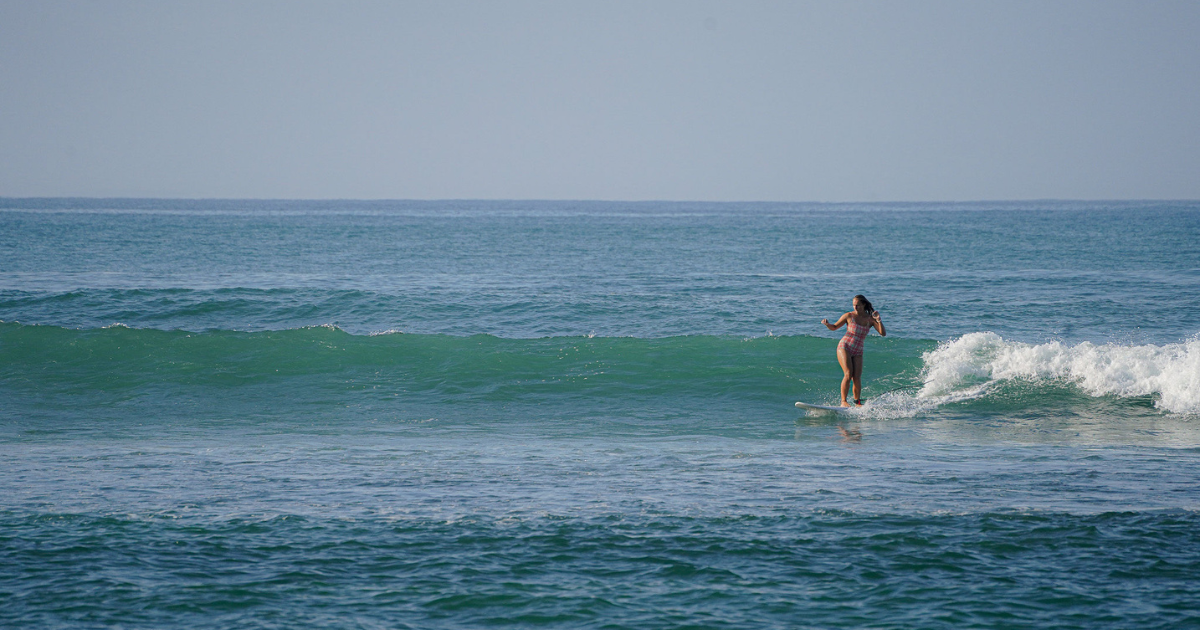
Let’s start with the best news. Most complete beginners catch their first white water wave properly, on their feet within their first lesson. Not perfectly, and certainly not gracefully but upright at last, arms outstretched, face lit up with joy, adrenaline rushing, and a sudden, undeniable surge of confidence.
That moment? It’s addictive. And it’s why people who ‘try surfing once on holiday’ end up planning their whole next trip around it.
In a beginner lesson at Tailslide, you'll typically learn:
- How to lie on your board and position yourself for balance
- Getting comfortable with the board on land and in shallow water
- Basic paddling technique for control and efficiency
- Catching whitewater waves with confidence
- Assisted pop-up drills → learning the correct takeoff technique
- Standing up and holding your balance on a surfboard
- Safety basics: how to fall safely, control your board, and avoid collisions
- First steps in ocean awareness: understanding waves, currents, and positioning in the lineup
Sri Lanka’s waves are particularly well-suited to beginners. Madiha offers soft, rolling whitewash that’s forgiving enough to learn on but fun enough to keep you hooked.
The First Week: From Standing to Steering
If you’ve come to Tailslide for a week-long surf and yoga retreat, this is where the transformation really begins.
By the end of your first week of consistent surfing one or two sessions a day most people reach what surfers call the ‘green wave’ stage.
You stop relying on the whitewater and start catching proper unbroken waves. You begin to feel the ocean rather than just react to it.
In a focused week, you can expect to:
- Improve your paddle technique and fitness dramatically
- Develop more consistent pop-ups without thinking about it
- Start riding the face of a wave not just the foam
- Feel more relaxed and less fearful in the water
- Fall in love with the morning routine of surf, yoga, and a power breakfast
The yoga sessions woven into our retreats make a bigger difference than most people expect. Flexibility, core strength, and body awareness all translate directly into better surfing. It’s not a coincidence that dedicated surfers practice yoga, the two disciplines are deeply complementary.
“Despite not surfing for 5 years, Podi had me back to surfing green waves by day 2! His coaching was excellent and really helped all 3 of us to progress really quickly and to feel safe in the water.” Rosie Tamblyn
The Real Answer: Surfing Is a Lifelong Conversation
Here’s the thing about surfing that separates it from most sports: there’s no finish line.
You can learn to stand up in a day. You can learn to ride green waves in a week. But the ocean is endlessly complex and that’s exactly what makes surfing so captivating for life. Every wave is different. Every session teaches you something, it is never repetitive and you can always keep improving.
What the timeline actually looks like:
Days 1–3: The Spark
Standing up. Catching whitewash. Overcoming any fear of the water. This is pure, unfiltered joy and it’s available to almost everyone.
Week 1–2: The Hook
Green waves. Steering. Starting to read the break. You stop thinking about the mechanics and start feeling the wave. This is where the obsession sets in.
Month 1–3: The Obsession
You’re back home, and you’re already searching for flights. You’re watching surf videos at midnight. You’ve bought a wetsuit even though you’re not sure why. This is completely normal.
Year 1+: The Practice
You’re surfing regularly wherever you are in the world. You have a style. You have preferences. Sri Lanka is on your calendar for the next winter escape.
What Actually Makes You Progress Faster?
After coaching hundreds of guests, our team has noticed a few things that separate quick progressors from those who plateau early.
The biggest factor isn’t natural talent, it’s consistency, commitment and coaching quality.
- Daily sessions beat weekend warriors every time. An immersive retreat week often equals months of occasional surfing at home.
- Video analysis is a game-changer. Seeing yourself surf, what your body is actually doing versus what you think your body is doing. This accelerates learning dramatically as humans are their own biggest critics.
- Physical preparation matters. Basic fitness, shoulder mobility and core strength make everything easier.
- Mental state counts for a lot. Surfers who relax into mistakes rather than fighting them progress faster. The ocean doesn’t care about how great you think you are doing.
- Quality instruction is everything. Surfing with someone who understands biomechanics and technique, not just someone who surfs well because this shortens your learning curve by months.
Benefits of Board Skills: Skateboarding vs Surfing
Skateboarding and surfing share similar technical moves, from turning and carving. Skateboarding needs balance, core stability and the ability to initiate turns through upper body rotation. While it won’t teach you how to perfect a pop-up on a wave, it helps to refine maneuvers in the water.
Let’s Breakdown The “Waterfall effect”
To master the flow and reduce the time it takes to feel competent, you must respect the natural order of movement. Whether on grip tape or fiberglass, use this top-down sequence:
- Eyes: Fixate on your target.
- Shoulders: Rotate your lead shoulder toward the goal.
- Torso: Allow your core to coil, creating rotational energy.
- Hips: Your center of gravity shifts to align with your torso.
- Knees: Compress or extend to manage pressure.
- Feet: These are merely the final messengers that transfer energy to the fins.
Following this Eyes-to-Feet hierarchy prevents the awkward, “twisted” posture that leads to most beginner wipeouts.
How to Practice on Dry Land Through SkateBoarding
You don’t have to wait for a swell to improve. Grab a surf-skate or a cruiser and head to a local park.
- Find a Mellow Bank: Approach at a slow speed and consciously lead with your chin.
- Exaggerate the Rotation: Feel how the board responds to your upper body.
- Visualize: Imagine the concrete is a breaking wave.
By practicing these drills, you’ll find that when people ask you how long does it take to learn to surf, your answer will be much shorter than theirs. You’re building muscle memory that stays with you even when the ocean is flat. At Tailslide Surf House, we are perfectly positioned to help you bridge this gap. Since we are situated just down the road from a local Skate Park, you can head over in your free time to skate and refine your technique.
Why Sri Lanka Is One of the Best Places to Learn
There’s a reason more Europeans are choosing Sri Lanka and specifically the southern coast as their surf destination of choice.
Madiha and the surrounding area around Matara offer warm water year-round (no wetsuit required), consistent beginner-friendly waves, and none of the overcrowded chaos you’ll find at more famous surf spots. You won’t be struggling for a position with 40 other beginners. You’ll have space to breathe, to fall, and to try again.
The season also aligns beautifully with European winter. While northern Europe is grey and cold from November through March, Sri Lanka’s southern coast is warm, sunny and pumping with surf.
Depending on the flight route from Frankfurt, Amsterdam or London to Colombo is around 10–11 hours, and a 2.5-hour drive south brings you directly to Madiha. It’s closer, and more accessible than most people would expect.
Frequently Asked Questions
Do I need to be a strong swimmer to learn to surf?You don’t need to be an Olympic swimmer, but basic swimming confidence is important. You should be comfortable in open water and able to swim at least 50 metres without stopping. If you’re unsure, get in touch with us before booking and we’ll advise honestly.
What’s the best age to start surfing?There is no best age. We’ve taught guests from their early twenties to their sixties. Surfing rewards patience and body awareness, qualities that often improve with age. The main thing is turning up.
Will I be surfing by the end of my Surf retreat stay?Almost certainly yes. Our structured coaching programme is designed to progress you from zero to riding real waves within your first week. What ‘surfing’ looks like is personal but you’ll be standing on a board, riding waves, and understanding the ocean in a way you didn’t before you arrived.
Ready to find out for yourself?
Tailslide Surf House runs small-group surf programs in Madiha, Sri Lanka designed for European travellers who want to learn properly, not just a tick on the bucket list .