
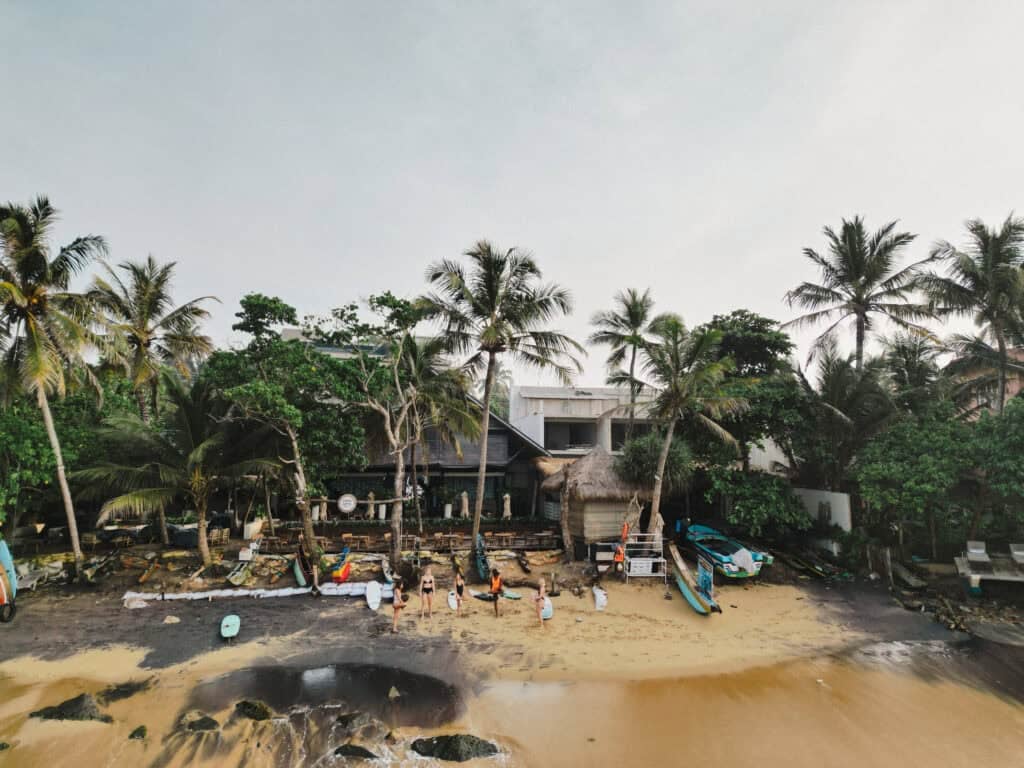
Picture the hotel version of a surf trip. Nice pool. Clean room. Helpful receptionist who cannot tell you which break is working today because they have never surfed in their life. You spend forty minutes on your phone researching, book a board hire from a shop that opens at nine, arrive at a beach that is already crowded, and paddle out without knowing where the rip is, which peak to sit on, or why everyone else seems to be getting waves that you are missing.
Now picture waking up in a surf house. Someone knocks on your door at five-forty-five. There is coffee. Five minutes later, you are walking to the reef with a coach who has surfed this break for fifteen years. He points to a spot on the water and says: “Sit there. When you see the horizon lift, go.” You get your best wave by seven a.m.
That is the difference. And it is not a subtle one.
The Fundamental Difference
A hotel serves your comfort. A surf house serves your surfing.
Every decision in a well-run surf house — from when breakfast is served, to which break gets chosen on a given morning, to how the coaching sessions are structured — is calibrated around one thing: getting you more waves, and helping you ride them better.
This is not a knock on hotels. A hotel is the right choice for a city break, a business trip, or a family holiday with mixed agendas. But for a dedicated surf trip, a hotel is a logistical obstacle dressed up in thread count. You are paying for amenities designed for people who are not there to surf.
A surf house removes that friction entirely.
The Coaching You Cannot Get Anywhere Else
The central advantage of a coaching-led surf retreat is access to expertise that hotel guests simply cannot buy separately, at least not in the same form.
At Tailslide Surf House, the head coach is the Sri Lanka National Surfing Champion. That is not a marketing detail. It is the difference between instruction from someone who read a manual and instruction from someone who has spent their life reading the ocean.
The structured coaching at Tailslide runs across five levels, which means your sessions have a purpose beyond “go surf.” Level one surfers work on fundamentals. Level three surfers work on positioning and wave selection. Level five surfers are refining the technical details that separate good surfing from great surfing. Each session builds on the last, and the coach knows where you are in that progression because they have watched every wave you have ridden.
Compare that to the standard hotel alternative: rent a board, find a break, figure it out yourself, hope for the best.
The five-level system also means you are not grouped with surfers who are either far ahead of or far behind you. In a large camp environment with twenty-five guests, this is nearly impossible to get right. In a seven-room house, it is straightforward.
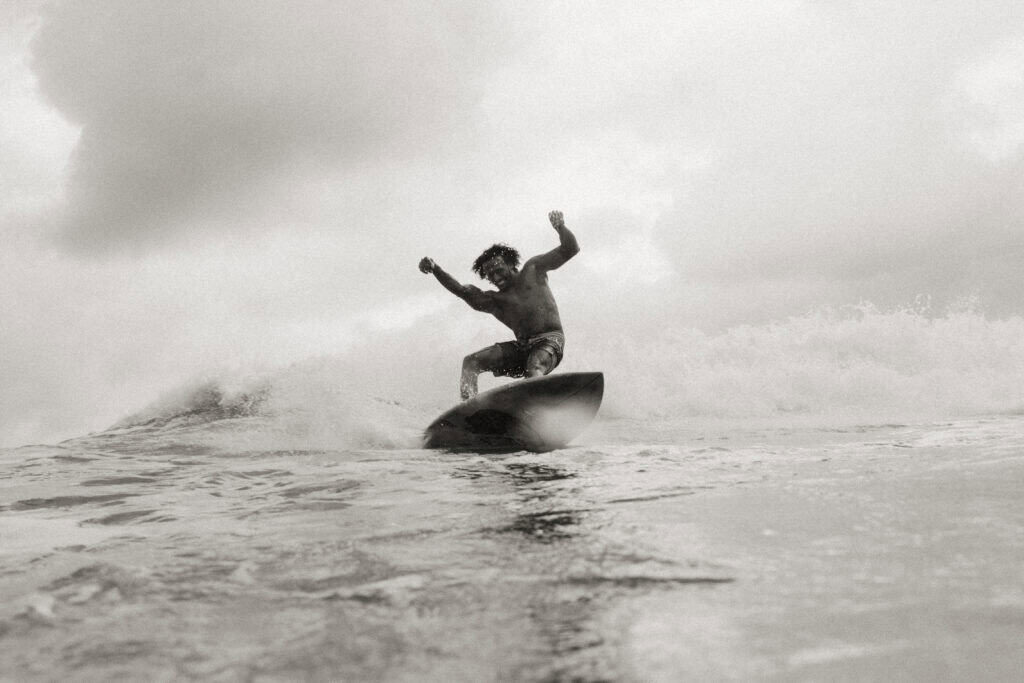
The Community Nobody Books For (But Everyone Talks About)
Most people who stay at a surf house book for the waves. They leave talking about the people.
There is something particular about a shared experience that happens before most of the world is awake. A dawn patrol session on a reef break is not something you describe accurately over dinner back home. But the five people who were in the water with you at six a.m. — they already know. The recap over breakfast covers the wave that almost connected, the wipeout that was simultaneously spectacular and harmless, the moment someone finally landed the snap they had been working on for three days.
This is not manufactured community. It is the natural result of putting a small group of people through the same physical and mental experience, repeatedly, in a beautiful and slightly demanding environment.
Solo travellers benefit from this most. Arriving alone and integrating into a group at a large camp or a hotel is a project. At a seven-room surf house, it happens by the second morning without any effort at all.
A Typical Day at Tailslide Surf House
Understanding what a day actually looks like helps more than any amount of general description.
Dawn patrol (5:45am): The early session is non-negotiable if conditions are right. The reef at Madiha before seven in the morning has a different quality to it — fewer people, better light, the wind typically still offshore. This is when most guests have their best sessions of the day.
Breakfast: Rice, fruit, eggs. Simple and sufficient. The session debrief happens here, naturally — what worked, what to focus on tomorrow, whether the afternoon swell is likely to improve or drop.
Morning coaching session: Structured, level-appropriate, purposeful. This is not a group lesson on a beach where fifteen people watch one instructor demonstrate a pop-up. This is active coaching in the water, with feedback that is specific to what you are actually doing.
Midday: The natural pause. The heat is real, the body needs recovery time, and there is a meal to eat. Some guests go to Polhena for a snorkel or a swim. Others stay at the house, wax their boards, read. Some make the tuk-tuk run to Mirissa for a good coffee.
Afternoon: Second session if the swell holds, yoga if it does not. The yoga component matters more than people expect. Surfing taxes specific muscles in specific patterns, and an hour of structured recovery work on land translates directly into how the body feels during the next morning’s session.
Evening: Quiet, generally. The south coast is not a nightlife destination. That is appropriate. The guests who want that drive to Mirissa. The guests who have a dawn patrol tomorrow are in bed by ten.
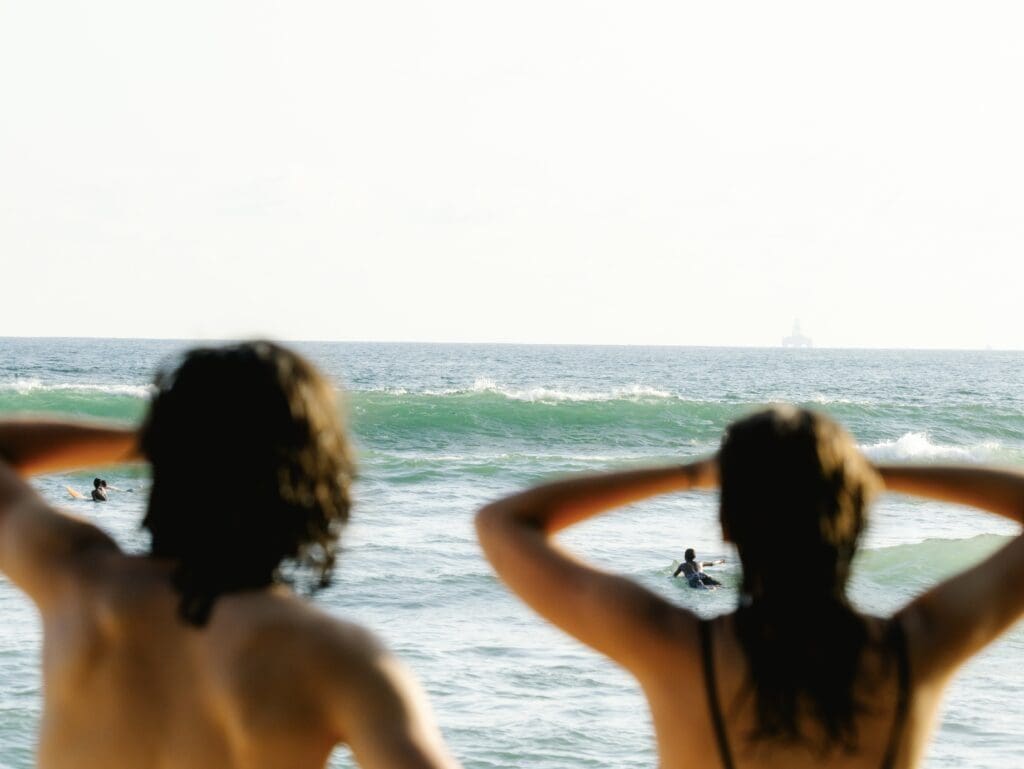
The Local Knowledge Factor
The coach at your surf house grew up on these waves. The receptionist at your hotel probably grew up somewhere else entirely.
Local knowledge in a surf context is not just knowing which beach to go to. It is knowing that Madiha’s right hander works best on a south-west swell at around 1.5 to 2 metres. It is knowing that the crowd at a particular spot doubles in size at ten a.m. and halves again by two. It is knowing which tuk-tuk driver is reliable at five in the morning and which cafe in Mirissa opens early enough for the post-dawn session coffee run.
None of this is available on TripAdvisor. All of it is available over breakfast at Tailslide.
The Cost Argument
A surf retreat is not cheaper than a budget hotel. It is not trying to be.
What it is: more cost-efficient for the specific purpose of a surf trip. Consider what a week at a standard beach hotel actually costs when you add the items that a surf house includes:
● Daily board hire: typically 15 to 25 USD per day
● Group surf lessons: 30 to 60 USD per session
● Transport to and from breaks: variable but real
● Local guides or surf tours: extra
A surf house bundles those costs, delivers them at higher quality, and adds the structure that turns a week of surfing into a week of progression. You leave a surf house measurably better than you arrived. That is not guaranteed at a hotel.
The relevant comparison is not “surf house vs budget hotel.” It is “surf house vs hotel plus all the extras you would need to replicate the experience.” Put in those terms, the retreat often wins on value.
Why Seven Rooms Matters
The large surf camp model — twenty-five or thirty guests, shared dorms, group lessons with fifteen people in the water — has its own appeal. It is often cheaper, louder, and more socially active in a particular way.
Tailslide is not that. Seven rooms means seven guests, maximum. Which means every coaching session is effectively small group or individual. It means the coach knows your name, your level, your specific weaknesses, and your goals before the second morning. It means the house runs on a rhythm that accommodates everyone rather than herding a crowd.
The trade-off is that it is never going to be the cheapest option in Madiha. The payoff is that nothing else in Madiha delivers what it delivers.
FAQ
What is typically included in a stay at a surf retreat? This varies by property. At a quality surf house like Tailslide, accommodation, daily coaching sessions, board use, and meals are typically bundled. Confirm specifics with the property directly, as inclusions differ from camp to camp.
Is a surf retreat suitable for beginners? Yes, with the right setup. The key is a structured programme with appropriate level grouping, access to beginner-friendly breaks, and patient coaching. Tailslide’s five-level system accommodates complete beginners through to advanced surfers, with sessions calibrated to each level.
How is a surf house different from a surf camp? Surf camps tend to be larger, more camp-style (shared accommodation, group meals, social-heavy). Surf houses are typically smaller, more intimate, with private or semi-private rooms and a higher coach-to-guest ratio. The experience is less structured socially and more focused on the surfing itself.
Do I need to bring my own surfboard? Not at a surf house with a quiver included in the stay. Tailslide provides boards suited to each guest’s level. If you have a board you prefer and can transport it, bringing it is never a problem — but it is not necessary.
How much does a surf retreat in Sri Lanka cost? Quality boutique surf retreats on the south coast range from approximately 75 to 150 EUR per person per night, with variation based on season, inclusions, and accommodation type. Contact Tailslide directly for current pricing and package options at tailslidesurfhouse.com.
Ready to stop figuring it out yourself?
Tailslide holds seven rooms. When they’re gone, they’re gone.